

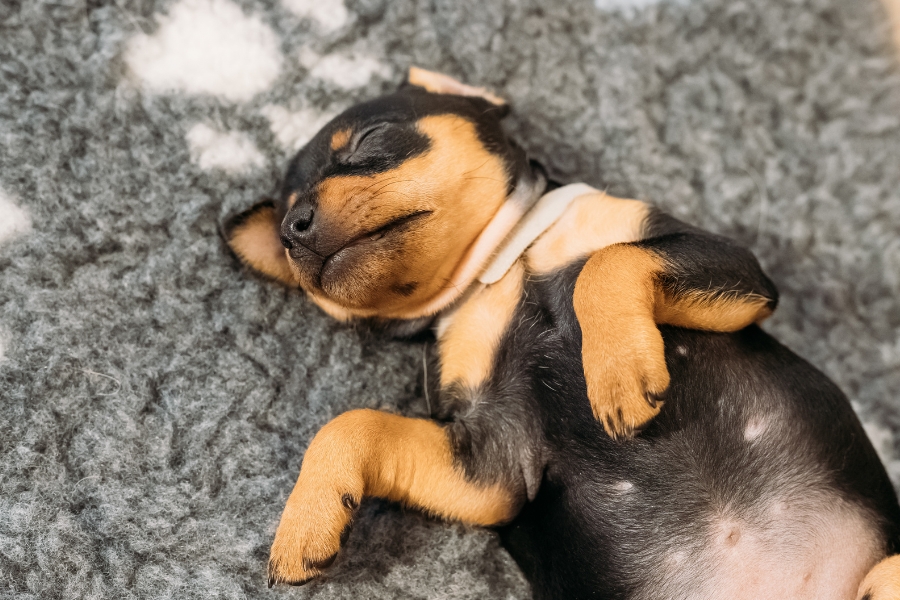
Creating a healthy puppy sleep schedule is one of the most important steps in raising a calm, well-behaved dog. Puppies need structure, consistency, and plenty of rest to support their growth and behavior. In this guide, you will learn how to build the perfect routine, establish a reliable puppy bedtime routine, and use puppy sleep training techniques to help your puppy sleep better at night.
Why a Puppy Sleep Schedule Matters
A consistent puppy sleep schedule supports both physical development and emotional stability. Puppies sleep significantly more than adult dogs, often between 18 and 20 hours per day, because their brains and bodies are growing rapidly.
Without proper rest, puppies may become:
- Overstimulated or hyperactive
- More prone to biting and chewing
- Resistant to training
- Easily stressed or anxious
Establishing a predictable sleep routine helps your puppy understand when it is time to rest and when it is time to play, eat, and train.
How Much Sleep Does a Puppy Need?
Sleep needs vary depending on age and breed, but general guidelines include:
- 8 to 12 weeks: 18 to 20 hours per day
- 3 to 6 months: 16 to 18 hours per day
- 6 to 12 months: 14 to 16 hours per day
Sleep is usually spread across nighttime rest and several daytime naps. A structured puppy sleep schedule ensures your puppy gets enough rest without becoming overtired.
Sample Puppy Sleep Schedule by Age
While every puppy is unique, the schedule below provides a helpful framework.
Typical Daily Puppy Sleep Schedule
- Morning wake-up and potty break
- Breakfast and short play session
- Nap (1 to 2 hours)
- Midday training or enrichment
- Afternoon nap
- Evening play and dinner
- Calm activities before bedtime
- Final potty break and bedtime
Consistency is more important than perfection. Try to keep wake-up times, meals, and bedtime similar each day.
How to Create a Healthy Puppy Bedtime Routine
A structured puppy bedtime routine signals to your puppy that the day is winding down. Puppies thrive on repetition, and a predictable routine reduces nighttime anxiety.
Key Elements of a Puppy Bedtime Routine
- Calm play instead of rough activity
- Short training session using basic cues
- Final potty break
- Quiet bonding time
- Placement in a designated sleep area
Avoid stimulating activities right before bed, such as chasing games or loud noises, as they can make it harder for your puppy to settle.
Puppy Sleep Training Tips for Better Nights
Puppy sleep training focuses on teaching your puppy to self-soothe and sleep independently. This process takes patience, but it leads to better rest for both you and your puppy.
Effective Puppy Sleep Training Strategies
- Use the same sleep location every night
- Introduce crate training gradually and positively
- Avoid late-night feeding
- Keep nighttime interactions calm and brief
- Reward quiet behavior in the morning
If your puppy cries at night, wait a short period before responding to ensure they are not simply adjusting to the routine.
Where Should Your Puppy Sleep?
Choosing the right sleep location helps reinforce the puppy’s sleep schedule.
Common Puppy Sleep Options
- Crate in a quiet area
- Crate in the bedroom during early weeks
- Puppy-proofed playpen
- A dog bed in a designated room
Many owners find that starting with the crate near their bed helps puppies feel secure, then gradually transitioning the crate to a permanent location.
Common Puppy Sleep Problems and Solutions
Even with a routine, challenges may arise.
Frequent Puppy Sleep Issues
- Waking up too early
- Crying at night
- Difficulty settling
- Skipping naps
Solutions often include increasing daytime naps, adjusting bedtime slightly, and reinforcing calm behaviors. A well-balanced puppy sleep schedule usually resolves these issues within a few weeks.
Conclusion
A consistent puppy sleep schedule, combined with a calming puppy bedtime routine and gentle puppy sleep training, creates healthier sleep habits that last a lifetime. With patience and structure, your puppy will rest better, learn faster, and feel more secure. For personalized guidance on puppy wellness and behavior, contact Newport Veterinary Hospital in Rock Hill, SC, to book an appointment and ensure your puppy gets the best possible start.
FAQs
Q1: How long should a puppy sleep at night?
Most puppies sleep 8 to 10 hours at night, with potty breaks depending on age.
Q2: When should I start a puppy bedtime routine?
You should start a puppy bedtime routine on the first night home to build consistency early.
Q3: Is crate training necessary for puppy sleep training?
Crate training is not required, but it can significantly improve puppy sleep training and nighttime safety.
Q4: Why does my puppy wake up so early?
Early waking is often caused by overstimulation, lack of daytime naps, or hunger.
Q5: Can I change my puppy’s sleep schedule later?
Yes, puppy sleep schedules can be adjusted gradually as your puppy grows and matures.